John Carter’s imprisonment among the Warhoons
A Princess of MarsJohn Carter’s imprisonment among the Warhoons is a sustained ordeal of bodily danger and mental endurance, but it also becomes the setting for his friendship with Kantos Kan and a daring escape from a public execution disguised as sport. Captured after drawing a pursuing force away from Dejah Thoris and Sola, Carter passes from a brutal march to an underground dungeon and then to the Warhoon Great Games. His survival depends not on a single victory, but on recovering his reason in the darkness and coordinating with a fellow prisoner when the arena appears to offer only death.
Capture and Transfer to Warhoon
Carter’s captivity begins when his effort to divert the charging warriors from Dejah Thoris and Sola ends in a fall. His foot catches on a projecting piece of quartz; the pursuers close around him, and their blows bring him to unconsciousness. Several hours later he wakes alive, among sleeping silks and furs in a small room, injured and under the care of an elderly woman. A scarred Warhoon leader orders that he be taken after the main column once the woman declares him fit to travel.
The treatment of his wounds makes the transition from capture to forced transport sharply practical. The woman has bound and plastered his injuries and applied remedies that rapidly reduce his pain. Still, Carter has no choice in his departure: he is strapped to an unruly thoat, flanked by mounted guards, and hurried after the column. He reaches the troops near dark and is brought before their leader, the jeddak of the Warhoon hordes. The expedition itself is then abandoned until the Great Games: injuries to Dak Kova have delayed the march, and the intended raid against a small Thark community was retaliation for the destruction of an incubator. The force, numbering ten thousand, turns back toward Warhoon with Carter in its custody.
The Dungeon and Its Psychological Ordeal
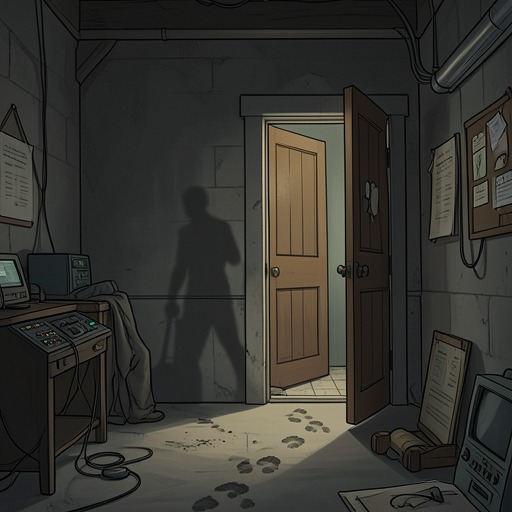
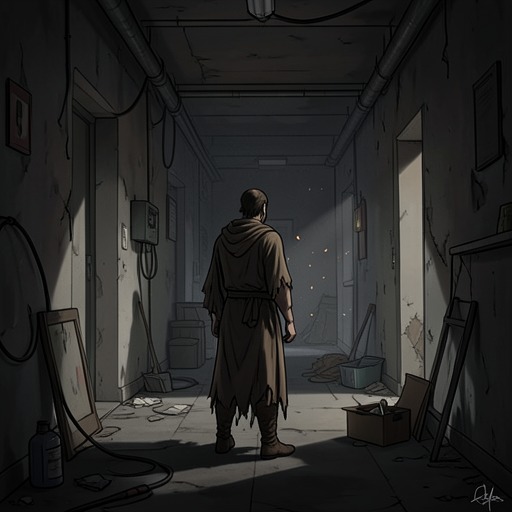
After roughly three days’ march, Carter is thrown into a dungeon and chained to both floor and walls. The cell’s darkness is so complete that he cannot tell whether his imprisonment lasts days, weeks, or months. Food arrives at intervals, but his jailer refuses to answer his questions; no sound from the world above gives him any measure of time or contact. The prison’s crawling creatures and occasional gleams of fiery eyes make the darkness feel inhabited, while leaving their owners unseen.
The deprivation concentrates Carter’s hatred on the jailer, the sole representative of the Warhoons he can reach. He observes that the man stoops to put the food within reach, bringing his head level with Carter’s chest. When the jailer next approaches, Carter crouches in a corner, gathers slack in his chain, and swings it against the man’s skull. The blow kills him without a sound. Carter falls upon the body in a state he describes as close to madness, but his fingers find a small chain holding keys. Touching them abruptly restores his composure: the possibility of escape gives his mind a practical task again.
That possibility disappears almost as soon as it appears. Six pairs of eyes approach through the dark. Carter retreats to his corner, palms held out, as the creatures reach the corpse; after a grating sound, they withdraw and vanish into a distant recess. When Carter reaches for the dead jailer again, the body is gone. He understands that the creatures have dragged it away to eat it. Two days pass without food before a new messenger resumes the routine of his imprisonment. The episode does not end the dungeon ordeal, but Carter resolves not to let its terror overwhelm his reason again.
Kantos Kan and the Games
Another prisoner is eventually chained near Carter. By the light of a dim torch, Carter recognizes him as a red Martian and greets him with the Martian word kaor. The newcomer is Kantos Kan, whom the Warhoons had caught while he was searching for Dejah Thoris. He had landed alone at the boundary of the city, explored its buildings and dungeons for two days and nights, and been seized while leaving after confirming that the princess was not held there. During their shared confinement, Carter and Kantos Kan become close and form a warm personal friendship.
Their dungeon confinement ends when both men are taken to the Warhoon Great Games. The amphitheater is an enormous excavation below ground level, partly filled with debris, and large enough in its present state to hold twenty thousand assembled Warhoons. Stones piled from ruined buildings form a barrier between the arena and the spectators; cages at either end hold prisoners and animals awaiting their turn. Carter and Kantos Kan are confined together among captives that include wild calots, thoats, mad zitidars, green warriors, women from other hordes, and unfamiliar beasts. Their noise fills the cages, while the arena’s uneven, neglected surface offers little reassurance to those sent into it.
Kantos Kan explains the rules that make the games a succession of forced combats rather than a single contest. Winners fight again until two remain; the victor of the final encounter, whether human or animal, gains freedom, while the others die in the arena. Fresh victims are brought the following morning, and the games continue for ten days. The public spectacle thus converts imprisonment into an ordeal staged before the whole Warhoon population: a prisoner’s only stated route to liberty is to outlive every other combatant.
The Feigned Death and Escape
Carter and Kantos Kan survive their separate bouts, sometimes only narrowly. In the day’s final contest, Kantos Kan faces a green warrior nearly sixteen feet tall, while Kantos Kan stands just under six feet. He stakes his life on a thrown sword: from about twenty feet away, he hurls it point-first, and it pierces his opponent’s heart. The victory leaves the two friends matched against one another, with the Warhoon audience expecting them to fight for the single freedom the games promise.
Instead, Carter whispers a plan to delay the encounter until nearly dark. The crowd grows angry when neither man delivers a fatal thrust, but the fading light gives them an opportunity. Carter tells Kantos Kan to thrust his sword between Carter’s left arm and his body; Carter clamps down on the blade and falls as though it has pierced his chest. Kantos Kan then places a foot on Carter’s neck and draws the sword across it in a gesture meant to imitate the finishing blow that severs the jugular. The blade slips harmlessly into the sand. In the darkness, the spectators cannot tell that Carter is alive, and Kantos Kan leaves to claim the freedom of the apparent victor.
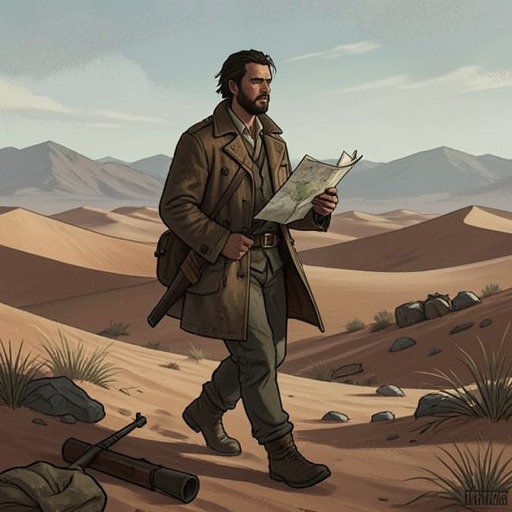
Carter’s part of the escape begins only after the amphitheater has emptied. He creeps to the top of the excavation and makes his way toward the hills beyond. The arena lies far from the plaza, in an uninhabited portion of the ancient city, and he has little difficulty reaching the hills. His release is not a pardon or a change in Warhoon policy: it is an escape made possible by the crowd’s belief that he has died and by the darkness that conceals the deception.
Significance and Aftermath
The Warhoon imprisonment escalates captivity through distinct kinds of exposure. In the dungeon, Carter is isolated from time, information, and other people, and the threat of unseen creatures turns the cell into a test of mental as well as physical endurance. At the games, imprisonment becomes public and procedural: freedom is formally offered, but only to the sole survivor of a sequence of fights. Carter escapes that system not by winning its final contest, but by making its spectators mistake survival for death.
Kantos Kan’s companionship changes the terms of Carter’s survival. Their friendship is formed in confinement, tested when the games force them to face each other, and expressed through a coordinated deception that allows Kantos Kan to leave as the apparent victor while Carter slips away separately. The sequence also frames Warhoon violence as routine spectacle, from the dungeon’s treatment of captives to games renewed with new victims each morning. Carter’s escape carries him beyond the arena and toward the next stage of his journey, but it leaves the Warhoon institution itself untouched.